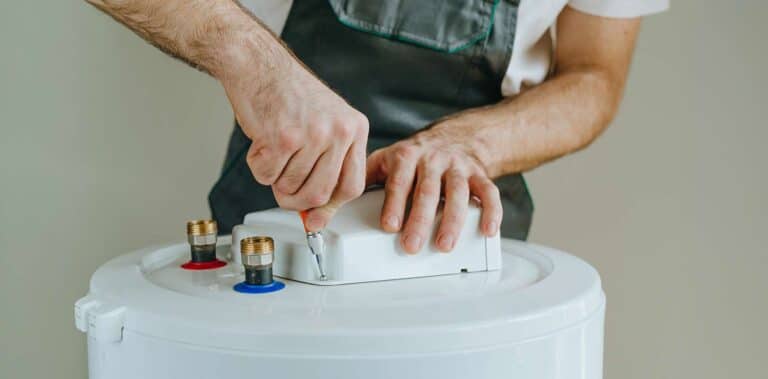


Why You Have No Hot Water, and What Actually Fixes It
No hot water usually comes down to one of five causes. A pilot or igniter that has gone out. A tripped high-limit switch on an electric heater. A failed heating element, a bad gas control valve, or a tank too full of sediment to hold heat. On an electric heater, the reset button is the only fix you can safely try. Gas control and element work belongs to a licensed plumber.
This problem has two versions, and each points to a different issue.
Version one: the hot water is gone completely at once. Version two: you still get hot water, but it runs out in four minutes instead of twelve. Which one you have narrows the diagnosis before anyone opens a panel.
Vanderford Air and Plumbing has worked on water heaters across the Houston Bay Area since 1976. What follows is the order a technician actually works through, and the two checks worth making before you pick up the phone.
What Causes No Hot Water?
Match your symptom to the column on the right. Fuel type matters, so find your heater first. A gas heater has a flue pipe out the top and a burner access panel near the floor. An electric heater has a thick cable entering the top, and one or two round access covers on the side.
No Hot Water: Symptom to Cause and Who Should Fix It
| What You Are Seeing | Likely Cause | Fuel Type | Safe to Try Yourself |
|---|---|---|---|
| No hot water at all, no flame visible | Pilot out or failed thermocouple | Gas | Relight once, per the label |
| No hot water at all, breaker is on | Tripped high limit switch | Electric | Yes, reset button |
| Lukewarm water only | Lower element failed | Electric | No |
| Hot water runs out fast | Upper element failed, or heavy sediment | Both | No |
| Water heats, then cools within a day | Failed gas control valve or thermostat | Both | No |
| Rumbling or popping from the tank | Sediment layer over the burner | Gas mainly | No |
| Rusty water, damp base, no heat | Tank failure | Both | No, shut it off |
Gas Water Heaters: Start at the Burner
Pull the outer burner access cover and look for the pilot flame through the sight glass. No flame means no heat, and the question is why it went out.
The Pilot and the Thermocouple
A thermocouple is a small sensor that sits in the pilot flame and generates a tiny voltage. That voltage tells the gas valve it is safe to stay open. When the sensor weakens, the valve shuts the gas off as designed. That is a safety device doing its job, not a defect.
Follow the relighting instructions printed on your heater and try once. If it lights then drops out within a minute, the thermocouple is usually the culprit. If it will not light at all, stop. Repeated attempts put unburned gas in a closed space.
If you smell gas at any point, leave the house, then call the gas utility and a licensed plumber. Do not flip switches on your way out.
When the Gas Control Valve Is the Problem
Some heaters show a blinking status light near the gas valve, and the blink pattern maps to a fault code on the label. A valve that has failed closed produces the same symptom as a dead thermocouple, which is why guessing wastes money. The test is a millivolt reading at the valve terminals, and that requires a meter and someone who knows the expected range.
Electric Water Heaters: The Reset Button First
This is the one repair worth trying yourself, because it is common and it costs nothing.
The High Limit Switch
Behind the upper access panel is a red button. That is the high limit switch, also called the ECO. It is a safety cutout that kills power to both elements if the tank temperature climbs too high. When it trips, you get no hot water, even though the breaker still shows on.
Turn the breaker off first. Remove the cover and insulation, press the red button until it clicks, then reassemble and restore power. Wait an hour.
If it trips again, do not keep resetting it. Something is driving the tank temperature up, usually a thermostat stuck closed or an element shorted to the tank. A switch that trips twice means the fault is upstream of the switch.
Reading the Element Pattern
Electric heaters have two elements, and which one failed tells you what you will feel at the tap. If you lose the lower element, you get a small amount of hot water followed by cold. Lose the upper, and you get almost nothing. Testing means an ohm reading across the terminals with power off and confirmed dead.
The Houston Bay Area Problem Nobody Mentions
Two local details change how these jobs go here.
First, sediment. Mineral scale settles out of heated water and forms an insulating layer on the tank bottom. That layer sits between the gas burner and the water it is meant to heat. The U.S. Geological Survey classifies water above 180 milligrams per liter of calcium carbonate as very hard, and 121 to 180 as hard. The harder the supply, the faster the layer builds. Popping and rumbling during a heating cycle is water flashing to steam underneath it.
Second, location. Many Houston Bay Area homes are slab-on-grade, which puts the water heater in the garage or, worse, the attic. A failing attic tank does not just stop making hot water. It drains through the ceiling.
If your heater lives up there, check two things. Make sure the drain pan is dry, and its line actually discharges outside. Call a leak and pipe service for anything damp. On hard water supplies, a water softener is the upstream fix that extends tank life.
Set It to 120 Degrees, Not Higher
Turning the thermostat up is the most common homeowner response to running out of hot water. It does not add capacity, and it does add risk.
The Consumer Product Safety Commission recommends homeowners “lower their water heaters to 120 degrees Fahrenheit,” and its figures explain why. A six-second exposure to 140-degree water causes a burn. At 130 degrees, it takes thirty seconds. At 120, it takes about five minutes. That difference matters most in a house with small children or older adults.
Water heating also runs about 18 percent of a home’s energy use. The Department of Energy calls it the second-largest energy expense in any home. A heater fighting a sediment layer at 140 degrees is wasting that money.
Expert Solutions for No Hot Water Problems
Fifty years in one market changes how you work. Vanderford Air and Plumbing has been second-generation, family-owned since 1976, so both the plumbing and venting side of a water heater job stay under one licensed roof.
That matters on this specific repair. A gas water heater sits at the intersection of gas, water, and combustion venting. A shop that only does one of those tends to work around the other two.
We diagnose before quoting, tell you which failures are worth repairing on a tank of your age, and we say plainly when replacement is the better spend.
If you have no hot water right now, we are available 24/7 for plumbing emergencies in the Houston Bay Area.
Schedule water heater service.
FAQs
Why did my hot water suddenly stop working with no warning?
A sudden and total loss of hot water points to an electrical or ignition failure rather than a worn tank. On an electric heater, the most common cause is a tripped high-limit switch, the red reset button behind the upper access panel. On a gas heater, it is usually a pilot that has gone out or a failed thermocouple. Gradual loss, where you still get hot water but less of it, points instead to a failing element or a sediment layer.
Is it safe to press the reset button on my water heater myself?
Yes, once, after turning off the breaker first. The reset button is a resettable safety cutout. A single trip is often caused by a brief overheat that has already passed. If it trips a second time, stop resetting it and call a plumber, because something is driving the tank temperature too high. Repeatedly resetting it defeats the only protection standing between the tank and a scalding hazard.
How long should a water heater last, and when is repair not worth it?
Most storage tank heaters give roughly eight to twelve years, and hard water shortens that. A thermocouple, element, or thermostat is usually worth replacing at almost any age because those parts are inexpensive. A leaking tank is never worth repairing, since the steel shell itself has failed. If a heater is past ten years and the repair involves the gas control valve or the tank, price replacement alongside the repair before deciding.
Why does my water heater make a popping or rumbling noise?
That sound is water trapped under a layer of mineral sediment on the tank bottom, flashing to steam as the burner fires beneath it. It signals lost efficiency rather than immediate danger, because the sediment insulates the water from the heat source. Left alone, the layer keeps building and can overheat the tank bottom, shortening the heater’s life. Annual flushing slows it down, and on very hard water supplies, a softener addresses the cause.
How do I check that my plumber is actually licensed in Texas?
The Texas State Board of Plumbing Examiners keeps a public license verification tool. It advises consumers to get the name of the company’s Responsible Master Plumber. The Board states that the RMP license number should appear in all advertisements and on a written estimate and invoice. You can also confirm the licensee has a Certificate of Insurance on file, and ask the Board’s enforcement department about complaints. Checking takes a minute and rules out the biggest risk on gas appliance work.
Key Takeaways
- No hot water with the breaker still on usually means a tripped high-limit switch, the red reset button on an electric heater.
- A gas pilot that lights then drops out within a minute points to a failed thermocouple, the sensor that keeps the gas valve open.
- Lukewarm water points at a failed lower element, while almost no hot water points at the upper element.
- The Consumer Product Safety Commission recommends homeowners lower their water heaters to 120 degrees Fahrenheit, noting a six-second exposure to 140-degree water causes a burn.
- The Department of Energy reports that water heating accounts for about 18 percent of a home’s energy use, typically the second-largest energy expense.
- The U.S. Geological Survey classifies water above 180 milligrams per liter of calcium carbonate as very hard, and harder water builds tank sediment faster.
- A reset button that trips twice means the fault is upstream of the switch, and resetting it again removes the tank’s overheat protection.
- Attic-mounted water heaters in slab-on-grade Houston Bay Area homes need a dry drain pan and a discharge line that actually reaches outside.
Citations and References
- U.S. Consumer Product Safety Commission: Tap Water Scalds, Publication 5098, recommended setting and scald exposure times
- U.S. Department of Energy, Energy Saver: Water Heating, share of household energy use
- U.S. Geological Survey: Water Hardness Classification
- Texas State Board of Plumbing Examiners: Consumer Information, license verification guidance
- Customer review: Sam Rivera, Google